
—

Whales of the Pacific Northwest

The species most commonly reported along the Oregon, Washington, and Vancouver Island coastlines. Sighting counts update continuously as our agents scan new reports.

Counts below cover reports gathered in the last 7 days.

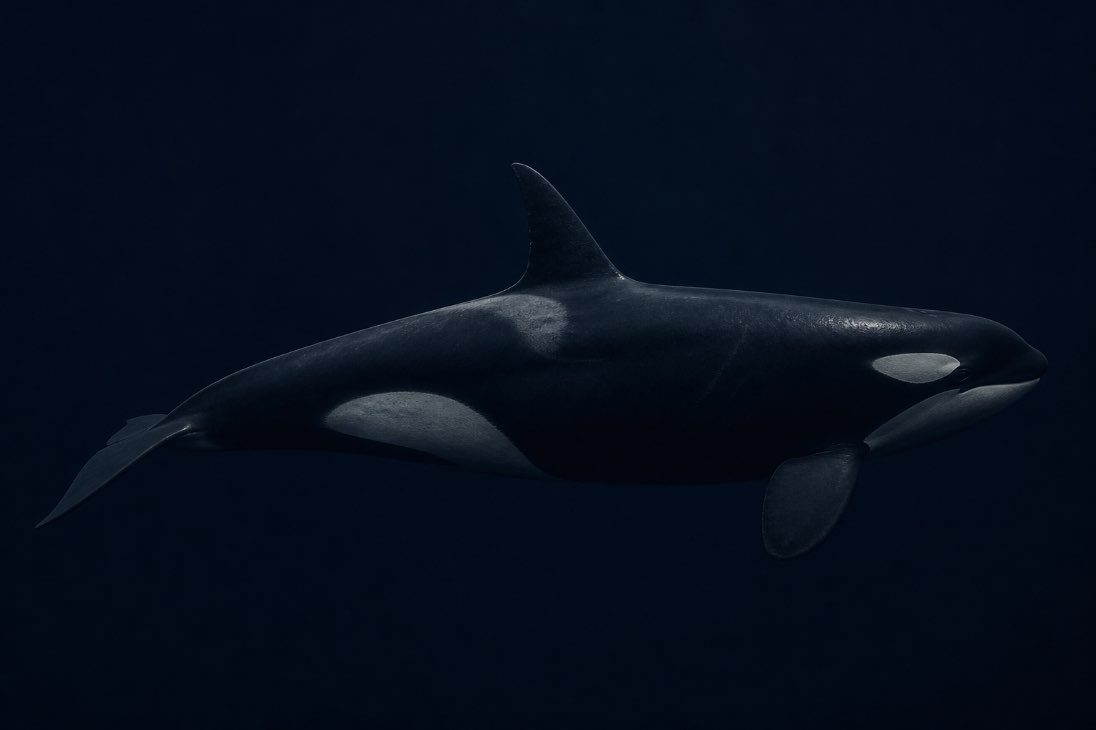
An orca, or killer whale, seen from the side in dark water showing its black-and-white markings and tall dorsal fin.

Orca (Killer Whale)

Orcinus orca

Resident pods hunt salmon in the Salish Sea; transient (Bigg's) orcas roam the outer coast hunting marine mammals.

— sightings this week

Orcas reach about 32 feet and 11 tons, and can live anywhere from 30 to 90 years. They travel in matrilineal pods — a few to more than 20 related animals that stay with their mothers for life.

Three distinct groups use these waters, and telling them apart matters more than telling orcas from other whales. Residents eat fish, mainly salmon. Bigg's (transient) orcas eat marine mammals and squid. A third offshore ecotype ranges much further out. The Southern Residents are the only endangered killer whale population in the United States, listed under the Endangered Species Act in 2005 and numbering about 74 individuals as of the July 2025 census.

When to look: year-round in the Salish Sea, with Bigg's orcas increasingly common along the outer coast. This is by far the most-reported whale in our feed.

Source: NOAA Fisheries — Killer Whale
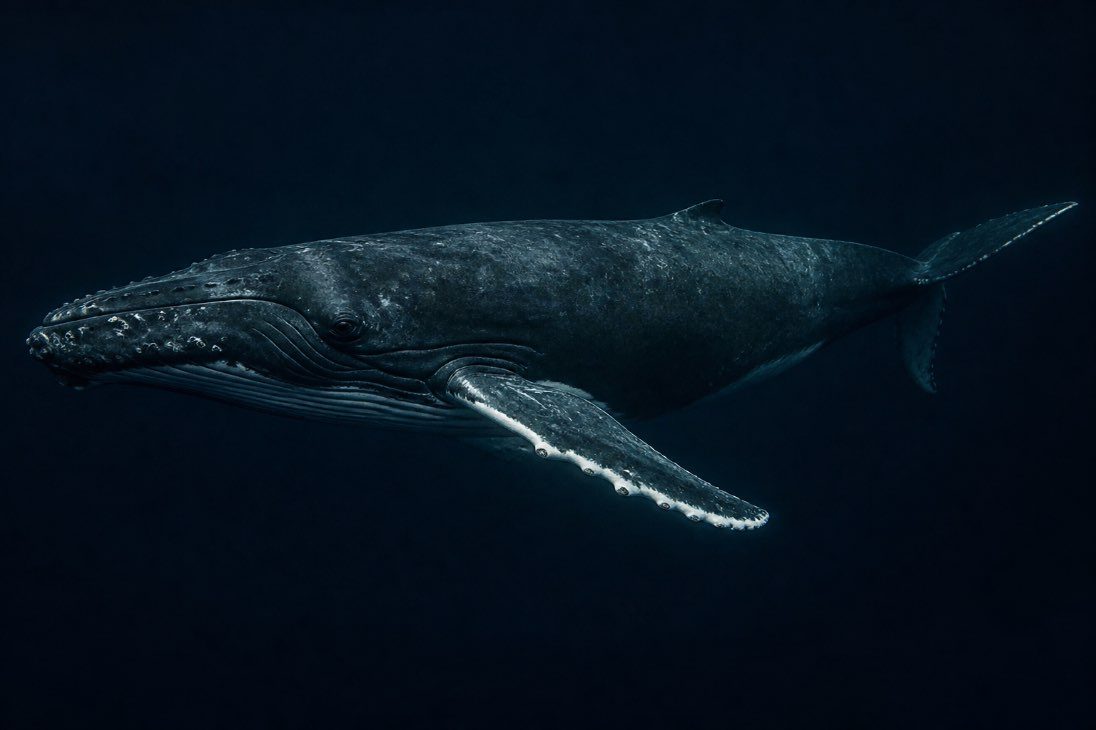
A humpback whale underwater showing its knobbly head and very long white-edged pectoral fin.

Humpback Whale

Megaptera novaeangliae

Known for breaching and long pectoral fins, humpbacks return each summer to feed along the outer coast.

— sightings this week

Humpbacks grow to roughly 60 feet and 40 tons. The genus name Megaptera means "big-winged," for the enormous pectoral fins that make them unmistakable when they roll at the surface.

They migrate up to about 5,000 miles between tropical breeding grounds and cold northern feeding waters — some North Pacific humpbacks cover the roughly 3,000 miles from Alaska to Hawaii in about 28 days. Off our coast they are here to eat krill and small schooling fish, sometimes working together in bubble-net feeding, blowing a curtain of bubbles to corral prey before lunging up through it. Every humpback has a uniquely patterned tail fluke, which researchers use like a fingerprint to track individuals across years and oceans.

When to look: summer and early fall along the outer coast, when they are feeding. They are the most acrobatic whale here — breaching and tail-slapping are common.

Source: NOAA Fisheries — Humpback Whale

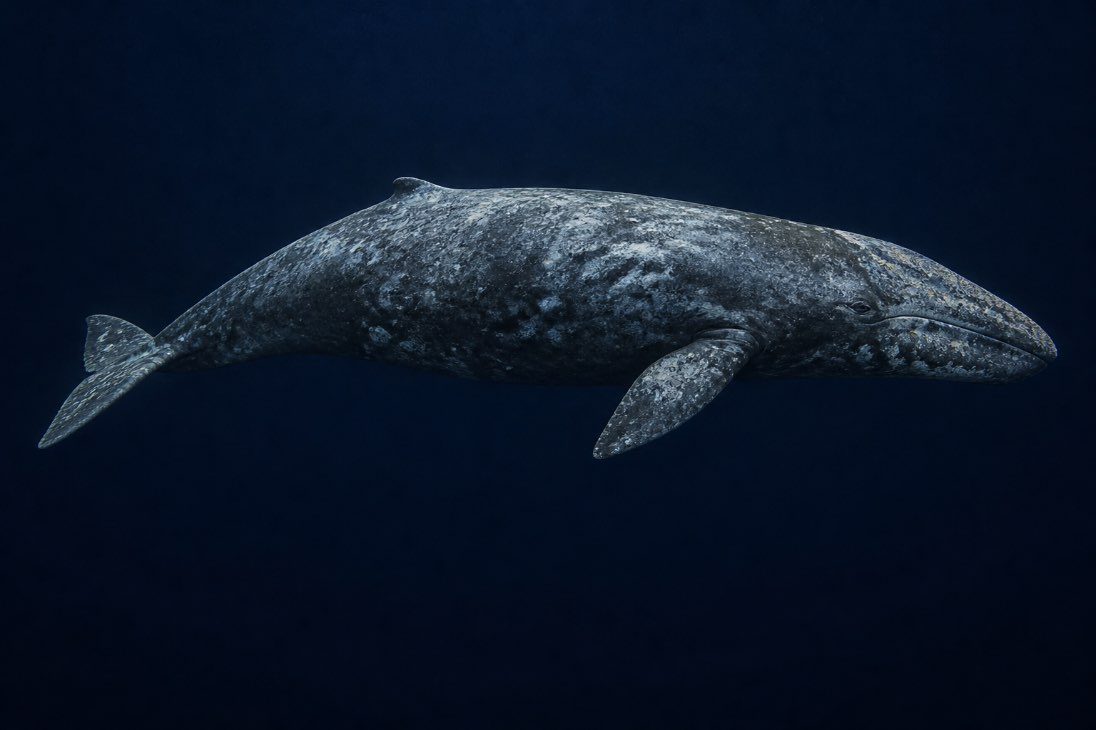
A gray whale in profile showing mottled grey skin and the knuckled ridge along its back in place of a dorsal fin.

Gray Whale

Eschrichtius robustus

Bottom-feeding whales migrating between Baja and the Arctic, with a resident group that summers off the Oregon coast.

— sightings this week

Gray whales reach about 49 feet and 90,000 pounds. They have no dorsal fin — instead a series of knuckles runs down the back, which is the easiest way to identify one from shore.

Their migration is among the longest of any mammal: roughly 10,000 miles round trip, and some individuals travel 14,000 miles or more, between Arctic feeding grounds and the calving lagoons of Baja California. Calves are born in January and February. Unlike other large whales they are bottom feeders, rolling on one side to rake the sea floor and strain sediment and small invertebrates through 130 to 180 baleen plates, leaving feeding pits and plumes of mud behind them.

When to look: the southbound migration passes Oregon from mid-December through mid-January, and the northbound migration runs from the end of March through June. Roughly 200 gray whales skip the trip entirely and spend the summer feeding off the Oregon coast, with peak viewing on the central coast from mid-June through mid-November.

Sources: NOAA Fisheries — Gray Whale · Oregon State Parks

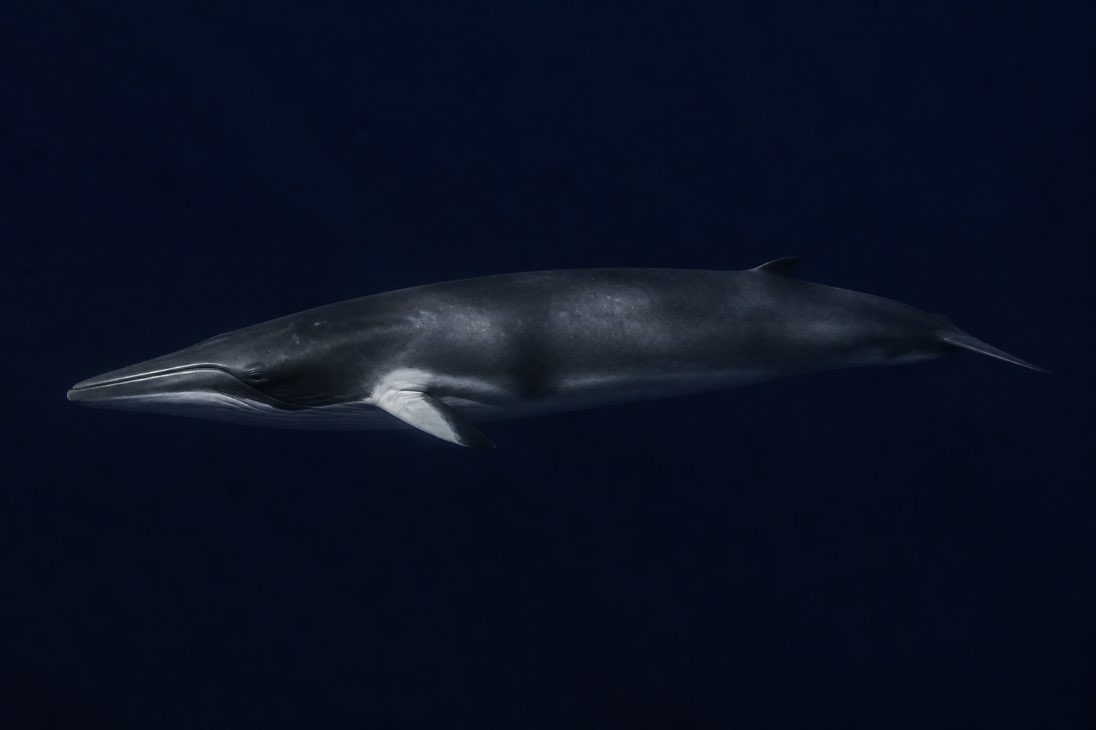
A minke whale underwater, sleek and dark with a sharply pointed snout and small curved dorsal fin.

Minke Whale

Balaenoptera acutorostrata

The smallest baleen whale in the region, usually seen alone and surfacing briefly near shore.

— sightings this week

Minkes are the smallest of the rorquals — up to about 35 feet and 20,000 pounds, living up to 50 years — and the most abundant rorqual in the world.

They are sleek and dark with a sharply pointed snout and a prominent curved dorsal fin. The giveaway is a white band across each flipper, sometimes called the minke's mitten. In the eastern North Pacific they are mainly a coastal species, feeding on krill, copepods, schooling fish and squid.

When to look: hardest of the four to catch. Minkes are usually alone, surface briefly and rarely show a fluke, so most reports come from calm days close to shore.

Sources: NOAA Fisheries — Minke Whale · NOAA PMEL Acoustics

When to see whales on the Oregon coast

Gray whales drive the calendar in Oregon, and the state marks the two migrations with organised Whale Watch Week events — one in late December during the southbound migration, and one in late March as the whales head north. Volunteers staff viewpoints up and down the coast during both.

Source: Oregon State Parks — Whale Watching

Seen one?

Sighting counts on this page come from live reports gathered across the Pacific Northwest. You can browse the newest sightings, watch them appear on the live map, or report a whale you spotted — every report is read before anything appears on the site.